
Cat Grooming in Jurupa Valley That Respects Every Cat's Pace
Signs Your Cat's Coat Needs Professional Attention
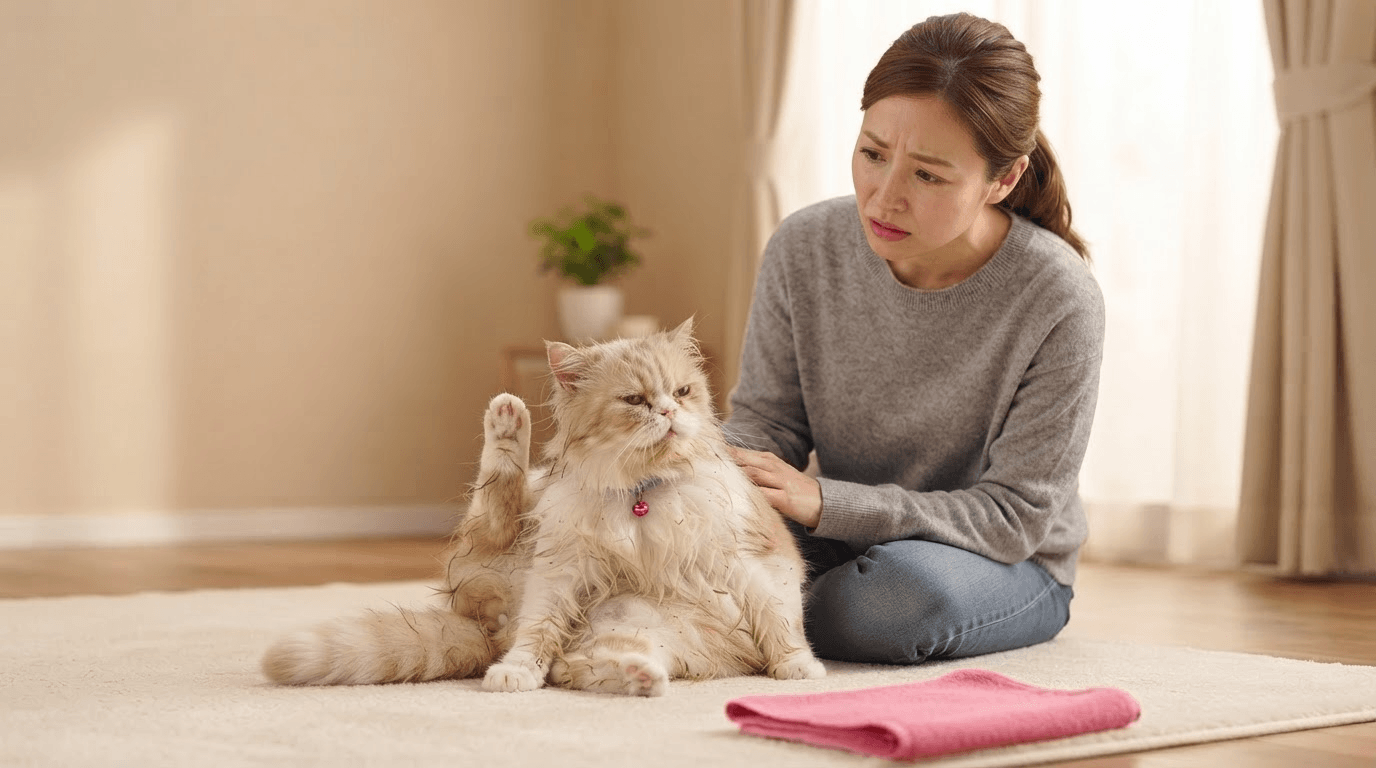
Cats groom themselves constantly. That's kind of their whole thing. So when you start seeing problems, something's off. We check the same spots every time a cat comes in: the armpits, behind the ears, the belly, the base of the tail. Those are the areas cats can't reach well and they're where mats start first.
A little tangle here and there isn't a big deal. But once fur starts clumping into tight knots close to the skin, brushing at home usually won't fix it anymore.
- Mats that feel hard or tight when you press on them, not just loose tangles
- Fur that looks greasy or feels waxy, even a day or two after your cat's own grooming
- Visible dandruff or flaky skin, especially along the back
- Your cat suddenly hissing, growling, or running off when you try to brush an area they used to tolerate
- A strong odor coming from the coat that wasn't there before
- Clumps of fur falling out in patches instead of the usual light shedding
Long haired cats and senior cats show these signs the fastest. An older cat with stiff joints can't twist around to clean their lower back and hips anymore. We see this often with senior clients. That's not laziness, it's just physically harder for them.
Owners don't always expect this: once a mat pulls tight against the skin, it can cause pain when the cat moves. That's when a full groom or de-shedding makes more sense than trying to work it out with a comb at home.
When Home Brushing Is Enough (And When It Isn't)
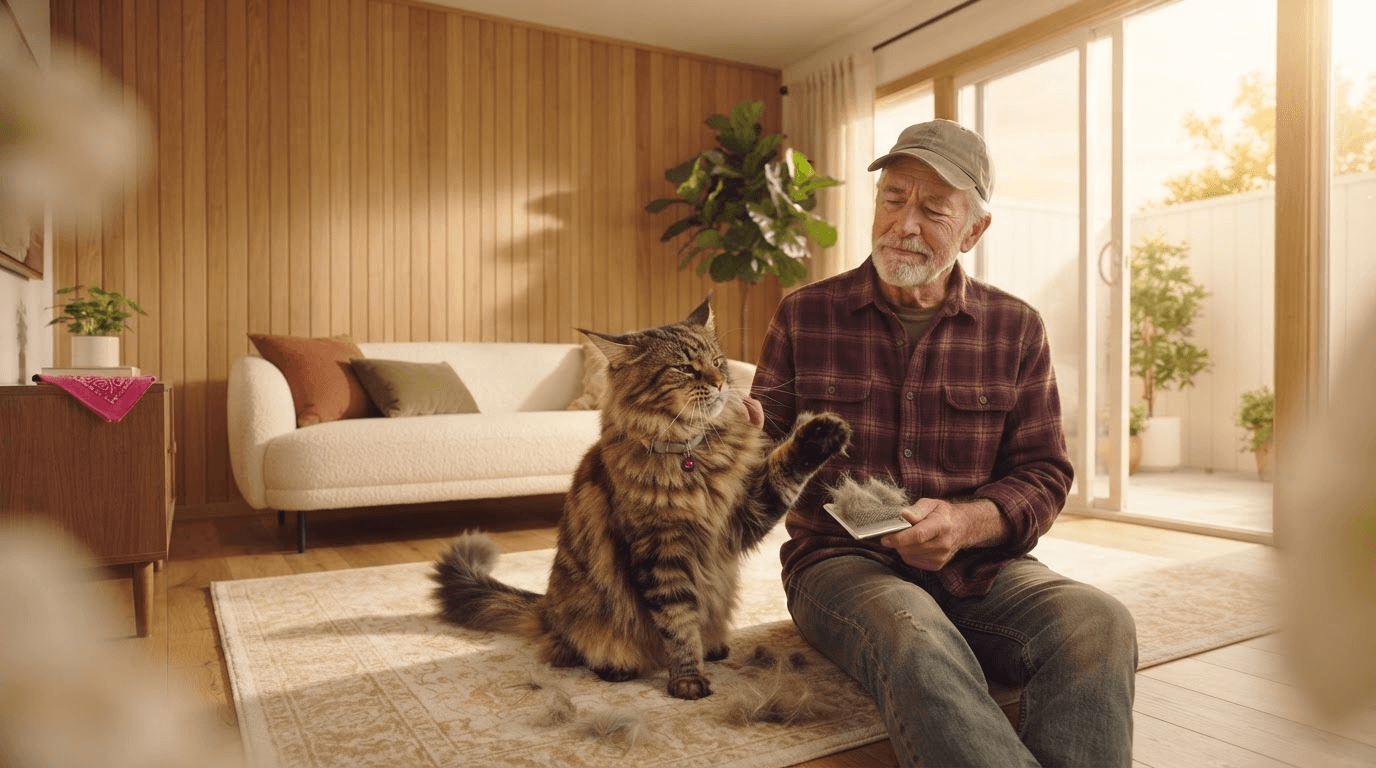
Some cats do fine with just a brush at home. If your cat has short hair, sheds normally, and lets you run a comb through her a couple times a week, you're probably good. No need to call anyone.
But here's where it changes. Long haired cats, older cats, and cats who've stopped grooming themselves as well as they used to, that's a different story. An owner brushes and brushes, and the mats keep coming back.
- Mats close to the skin that pull when you touch them
- Your cat won't sit still long enough for a real brushing session
- Greasy or clumpy fur even right after you've brushed it
- Your cat has stopped grooming certain spots, usually the back or hips
- You've tried cutting mats out yourself and nicked the skin
If any of that sounds familiar, brushing at home isn't going to fix it anymore. Mats trap moisture and pull on the skin. Cats hide pain, so by the time you notice, it's already uncomfortable for them.
Not sure which category your cat falls into? That's common, especially with cats who don't love being handled. A quick look usually tells us whether a brush at home will hold you over or if it's time for a Cat Grooming appointment.
Senior cats deserve a special mention here. Arthritis and stiff joints make self-grooming harder. Their coats slip past what brushing can fix faster than people expect.
Choosing Between Salon and Mobile Grooming for a Nervous Cat
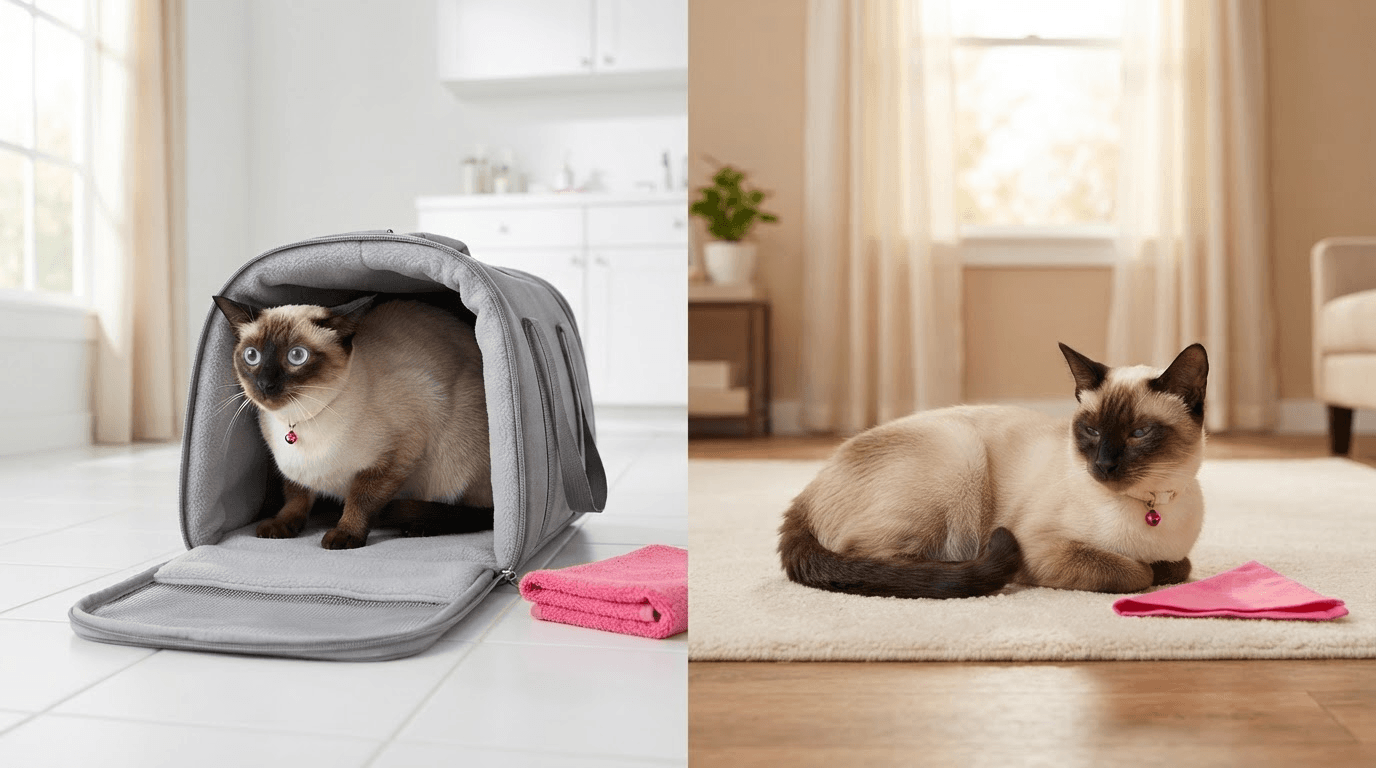
Some cats do fine getting loaded into a carrier and driven across Jurupa Valley. Others fall apart the second the carrier comes out of the closet. If yours is the second kind, you already know it. Shaking, hiding under the bed, howling in the car, that's a cat telling you something.
That's why we offer both salon appointments and mobile grooming. Not every cat does well with the same routine. Forcing a scared cat into a car ride can undo any calm you built up before the appointment even starts.
So how do you pick? Think about what stresses your cat out. Is it the car ride, or is it new places and new smells once you get there? A cat who tolerates travel fine but freezes up in an unfamiliar salon might do better staying home for grooming. A cat who's fine anywhere but hates the car is the opposite case.
- Cats who hide, pant, or drool during car rides often do better with mobile grooming at home
- Cats who get overwhelmed by other animals nearby may prefer the quieter setup mobile grooming offers
- Cats who are fine traveling but need a slower pace can still get that patient, one-on-one attention at our salon
- Senior cats with joint pain or arthritis usually do better skipping the car altogether
There's no wrong answer here. We just want your cat to get through the appointment calm. That's the whole point of offering both.
What Happens During a Cat Grooming Appointment
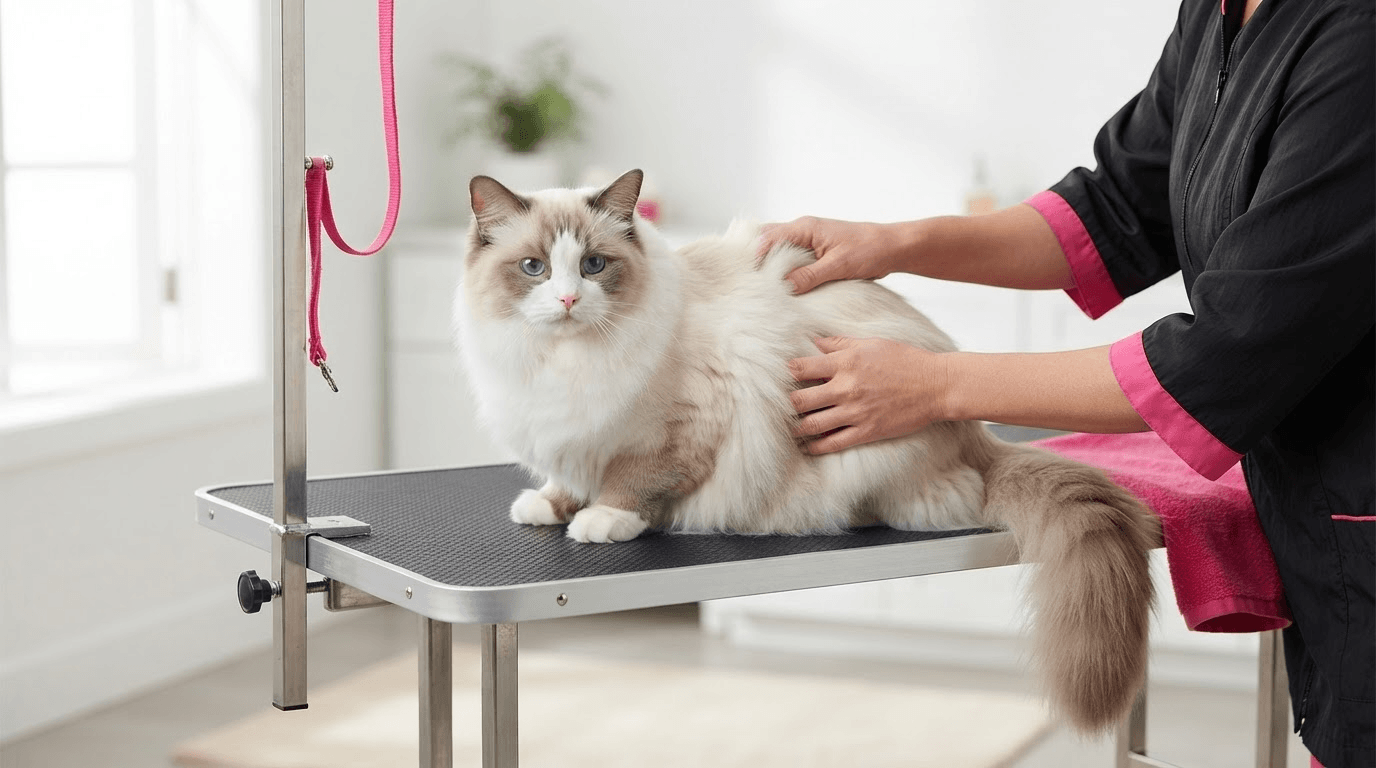
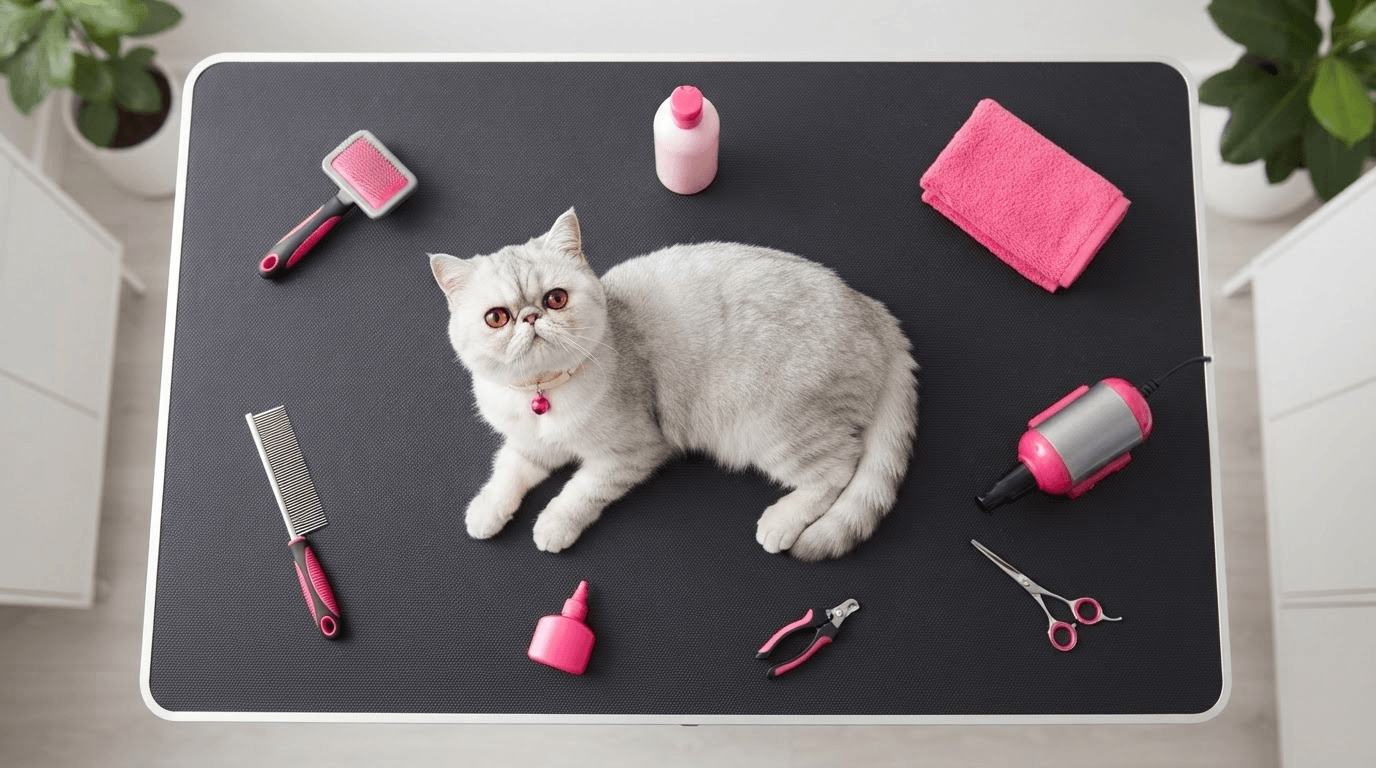
So what does a cat grooming visit look like? A lot of cat owners picture the same thing dog owners get: wash, dry, clip, done. Cats need a slower pace than that. Our team takes it step by step and watches your cat's body language the whole time.
- We start with a quick hands-on check. We feel for mats, check the skin, and see how your cat is reacting before we do anything else.
- Next comes the bath, using a shampoo suited to your cat's coat and skin. Some cats tolerate water fine, others need a calmer approach and extra reassurance.
- After the bath we towel dry, then move to a low-noise dryer setup. Loud dryers are a big stressor for cats, so we keep things quiet and go slow.
- Then we work through any mats or tangles by hand or with clippers, brush out loose fur, and trim nails if that's part of the visit.
- Last step is a final comb-through and a check over the ears, eyes, and paws before your cat heads home.
We build in breaks whenever a cat needs one. That's the whole point of one-on-one appointments instead of rushing between ten pets in an afternoon. A nervous cat might get a few extra minutes just sitting on the table getting used to the sounds before we even touch a brush.
Full grooms take longer than a bath and tidy. There's more happening: brushing, de-shedding, nail trims, sometimes a sanitary trim too. Most owners are surprised how calm their cat is by the time we're done.
How Cat Grooming Pricing Works
Cat grooming pricing isn't one flat number, and there's a reason for that. A cat with a short, easy coat needs less time than a long haired cat with mats near the belly or behind the ears. Coat condition, temperament, and how much handling a cat needs all play into it. A calm cat who sits still is faster to work with than one who needs breaks every few minutes.
So what moves the cost up or down? A few things matter most.
- Coat length and condition: badly matted fur takes more time and care to remove safely
- How the cat handles being groomed: nervous or squirmy cats need slower, gentler sessions
- Which service the cat needs: a full groom is a bigger job than a bath and tidy
- Whether de-shedding treatment is added on, since heavy shedders need extra brushing time
- Age and mobility: senior cats often need a slower pace and more frequent breaks
Before you book anywhere, ask what's included. Does the service cover nail trims? Ear cleaning? Is de-shedding separate from a full groom? Good groomers will walk you through this before your cat ever gets on the table.
We see this often. An owner assumes a bath is all their cat needs, then we find mats hiding under the fur that need a different approach. That's why we look at the coat first, then talk about what's really needed. It keeps things honest, and it means you're not guessing what you're paying for.
FAQs
Ready to Book Your Cat's Grooming?
Call us or send a quote request, whichever's easier for you. We'll take it from there.