
Deshedding Treatment in Jurupa Valley That Fits Your Pet's Pace
What Deshedding Treatment Involves
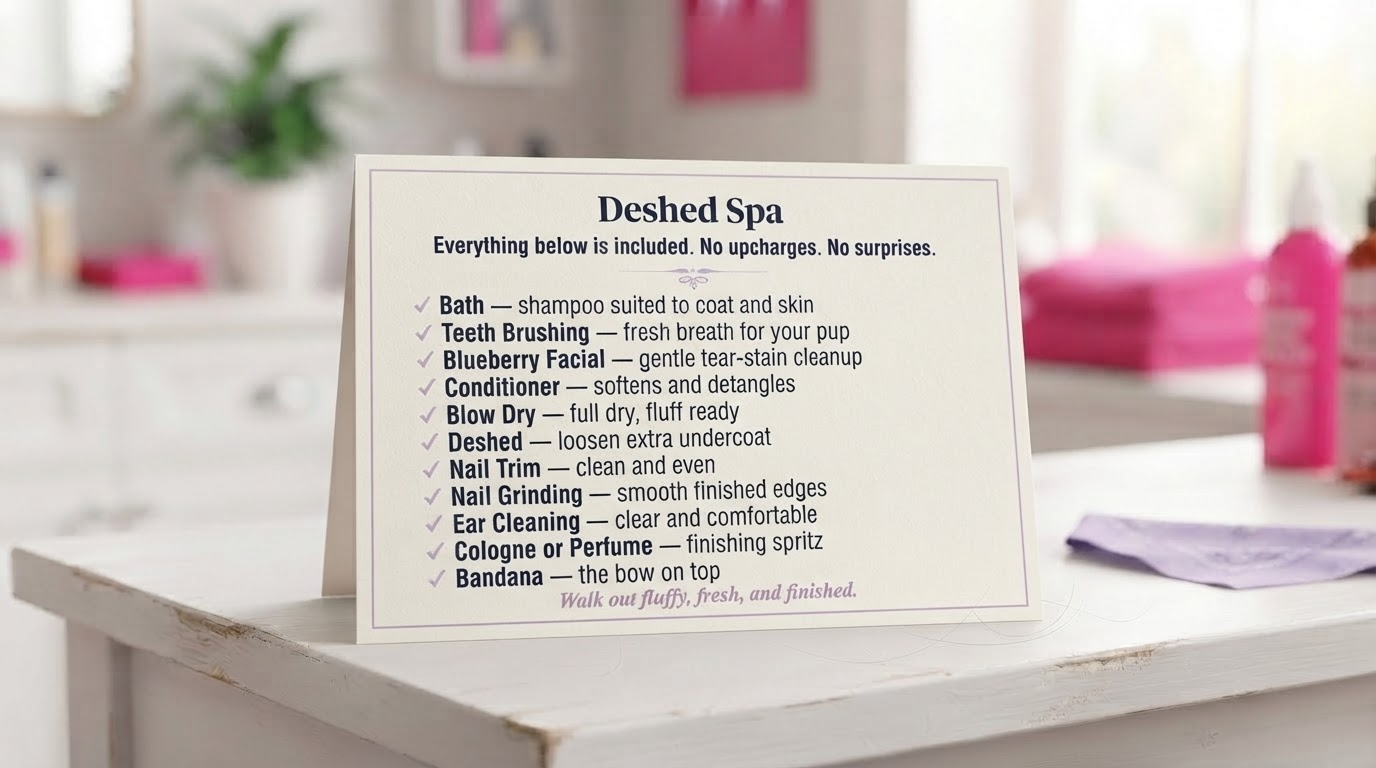
So what happens during a deshedding treatment? It's not one tool, it's a few steps working together. First comes a bath with shampoo made for loosening undercoat. That part matters more than people think.
After the bath, we use a high velocity dryer. This blows out the loose hair that's already worked free from the shampoo step, more than a towel dry ever could. Then comes the brushing, using tools built to reach the undercoat without tearing at the topcoat. For a husky or a German Shepherd mix, and we see plenty of both around Jurupa Valley, this is where most of the shedding gets removed.
- Shampoo and conditioner made to loosen dead undercoat
- High velocity drying to blow out what's already loose
- Hands-on brushing with undercoat tools
- A final check to catch mats hiding near the ears or legs
Most mats we find during this treatment were hiding somewhere the owner couldn't easily see: behind the ears, under the arms, low on the belly. That's just how it goes with double coated breeds.
This is different from a Bath and Tidy. That's more about a quick clean and a neat look. Deshedding treatment is built around pulling out the undercoat that's dead and ready to fall out anyway, before it lands on your floor at home instead.
Learn more about Bath and Tidy
Signs Your Pet Needs Professional Deshedding
So how do you know it's time to book instead of just grabbing another brush? Some pets shed a little all year. Others blow their coat hard, twice a year, and that's a different problem.
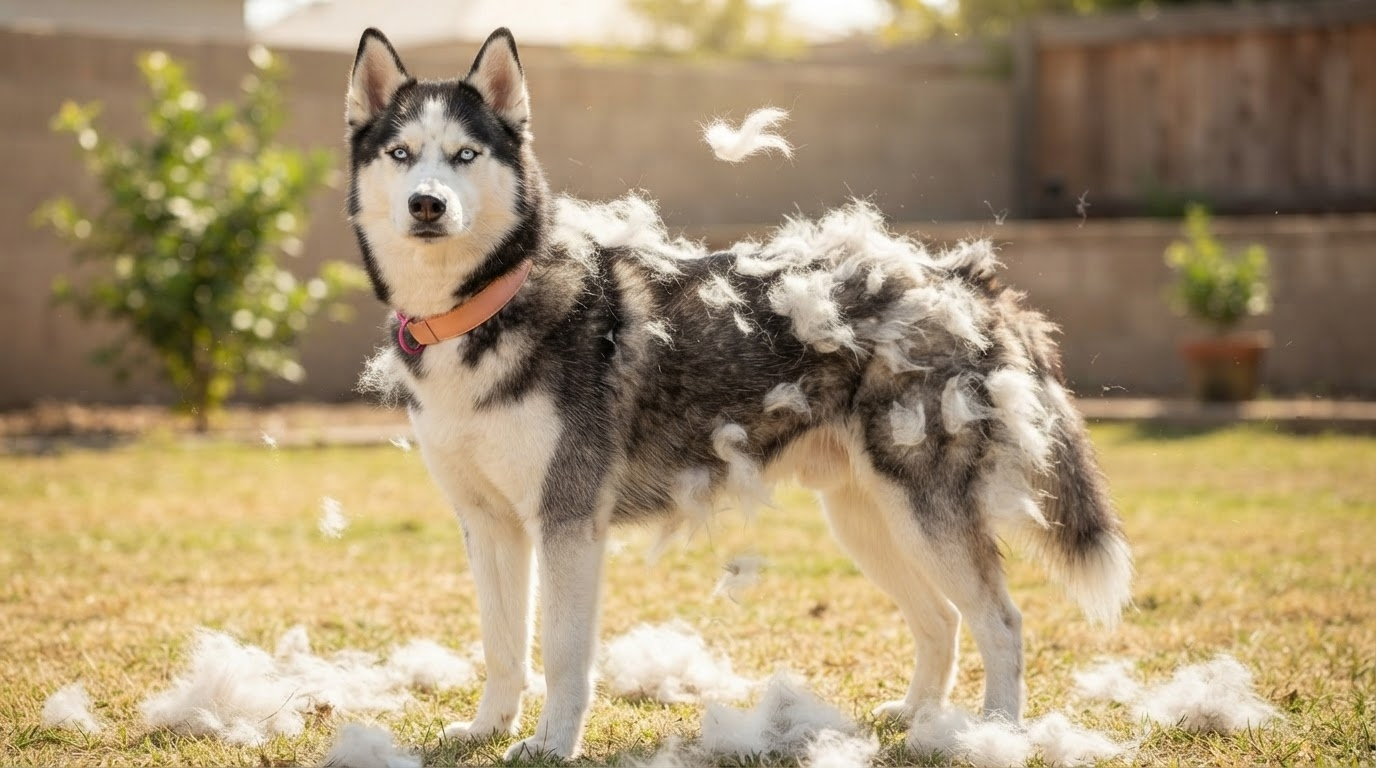
Jurupa Valley's dry heat in the summer months pushes double-coated dogs like huskies, shepherds, and labs into heavy shedding season earlier than you'd expect. We see it every spring. Owners come in thinking their dog has a skin problem, and really it's just the undercoat trying to come loose all at once.
- You're vacuuming daily and it still looks like the dog never got brushed
- Fur is matting close to the skin, especially behind the ears or on the belly
- Your dog seems itchy or licks at patches more than usual
- You can pull out clumps of loose undercoat by hand
- Brushing at home used to help and now it barely makes a dent
Here's the thing: once the undercoat gets packed in tight, a regular slicker brush at home just moves the top layer around. It doesn't get underneath. That's not a knock on you, it just takes different tools and a slower hand to work through it without hurting the dog.
A dog that's shedding hard also often has dry, flaky skin underneath the mess. That's a sign the coat needs real attention, not just a quick swipe with a brush at home.
If your dog is scratching more than normal, or you're finding bald-ish patches where the fur's gotten thin, that's worth a look too. It's not just a shedding season thing.
When Home Brushing Is Enough (And When It Isn't)
Let's be honest for a second. Not every shedding dog needs professional deshedding treatment. If you've got a short haired dog and you're brushing a few times a week, and your floors are manageable, you're probably fine. Grab a slicker brush, do it outside if you can, and keep at it.
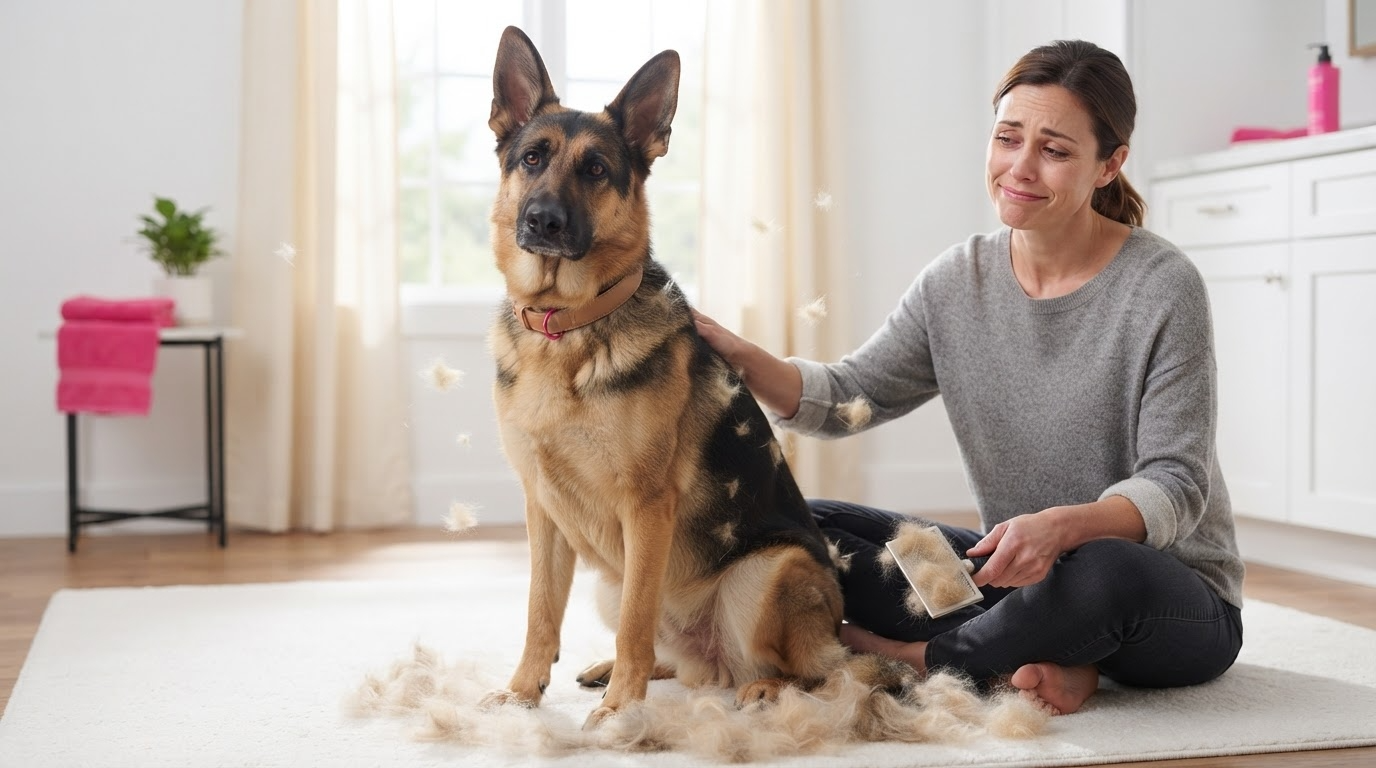
So when does home brushing stop being enough? Here's the honest answer. Double coated breeds, think Huskies, German Shepherds, Corgis, and mixes with a thick undercoat, build up loose fur faster than a home brush can pull it out. The undercoat mats down close to the skin. A regular brush glides right over the top of it. You end up brushing every day and still finding fur on the couch, in your car, stuck to your clothes.
- You're brushing daily and still seeing clumps of loose fur around the house
- Your dog scratches more than usual or the coat looks dull instead of shiny
- You can grab a handful of fur just by running your hand down their back
- It's spring or fall and the shedding suddenly feels nonstop
- Your dog has a double coat breed and hasn't had a deep deshed in months
We see this every week here in Jurupa Valley. Someone comes in during that spring coat blow, convinced their dog is shedding more than normal, and they're right. That undercoat needs to come out, and a slicker brush at home just can't reach it the way our tools and technique can.
If your situation matches the list above, that's your sign. If not, keep brushing and save your visit for when it's really needed.
Choosing Between Salon and Mobile Deshedding Visits
So which one's right for you, salon or mobile? It depends on your pet more than anything else.
Some dogs walk into our Jurupa Valley salon and settle right in. They like the change of scenery, the smells, the routine of it. Cats are usually a different story. Most cats do better staying in their own space, which is why mobile grooming works so well for them. We bring the deshedding tools right to your door and skip the stressful car ride and waiting room altogether.
Senior pets are another group where mobile visits tend to make more sense. An older dog with stiff hips doesn't need the extra hassle of getting in and out of a car twice. Staying home, in a familiar spot, just makes the whole thing easier on their joints and their nerves.
Here's a quick way to think about it.
- Salon visit: good for social pets who enjoy new environments and don't mind other animals nearby
- Mobile visit: better for anxious pets, senior pets, or homes with more than one pet needing deshedding treatment the same day
- Salon visit: works well if you want to run errands while your pet gets groomed
- Mobile visit: works well if your pet gets carsick, hides at the sight of a carrier, or just does better on home turf
We've had folks switch from salon to mobile after one bad car ride, and folks switch the other way because their dog loves the outing. There's no wrong answer here. The point of deshedding treatment is the same either way: less hair everywhere and a more comfortable pet. How your pet gets there is just details.
Caring for Nervous, Senior, and First-Time Pets During Deshedding
Not every dog jumps right up onto the table happy as can be. Some shake. Some try to back away. Some have never even had a deshedding treatment before and have no idea what's happening. We get it, and we see this every week.
Here's the thing about deshedding work specifically: it takes longer than a quick bath. There's more brushing, more tool time, more contact. For a nervous dog, that can feel like a lot. So we slow down. We let the dog sniff the tools first. We take breaks if we need to. Rushing a scared pet never ends well. It just makes the next visit harder.
Senior pets need their own kind of care too. Older joints get sore standing too long. Older skin can be thinner and more sensitive to brushing. Stephanie's background includes training in senior pet grooming. Adjusting the pace and pressure for an older dog or cat isn't a guess. It's built into how we work.
First-timers are their own category. A puppy getting deshedded for the first time doesn't know the sound of a dryer or the feel of an undercoat rake yet. We introduce things slowly instead of throwing the whole process at them at once.
Not sure if your pet can handle it? That's a fair question, and it's one we hear a lot.
- Older pets get extra breaks and gentler handling for sore joints
- Nervous pets get time to settle in before tools come out
- First-time pets get a slower introduction to brushes and dryers
- Every pet gets one-on-one attention, not a rushed slot between others